Week 28 | 6–12 July 2026 Published Monday, 13 July 2026 | Tailwind Times — Black Box Section
INDIA STATUS: 🔴 RED ASIA STATUS: 🔴 RED
GLOBAL STATUS: 🟡 AMBER
India is 🔴RED this week because the AAIB released its preliminary report into Air India Flight 171 on 12 July 2025 still eludes Indians after a year confirming that both engine fuel control switches moved to cutoff moments after takeoff, while Mumbai remained under major monsoon-related operational strain through the week. Asia stays RED 🔴 becaue of K2 Airways crash in the Arabian sea this week and because of continuing China low-altitude safety fallout and regional airspace security tensions, while the global system remains 🟡AMBER rather than RED because the week was dominated by investigation and airspace-risk developments rather than a major scheduled-airline fatal crash.
Week in Safety
The defining event of the week was not a new crash but a major investigative disclosure-India’s AAIB published the preliminary report into the 12 June 2025 Air India 171 disaster, making it the central aviation safety story worldwide this week. Alongside that, weather disruptions in Mumbai, a cargo crash in the Arabian Sea reported in open-source aviation trackers, and continuing fallout from recent France and China events shaped the operational picture.
6–7 July 2026 | Multiple aircraft | Mumbai CSMIA | Mumbai, India
Monsoon disruption deepened after last week’s one-hour runway closure, with Indian media reporting 17 cancellations, five diversions, and 365 delayed flights from late 5 July into 6 July due to persistent heavy rainfall and unsafe operating conditions.
Severity: Operational disruption
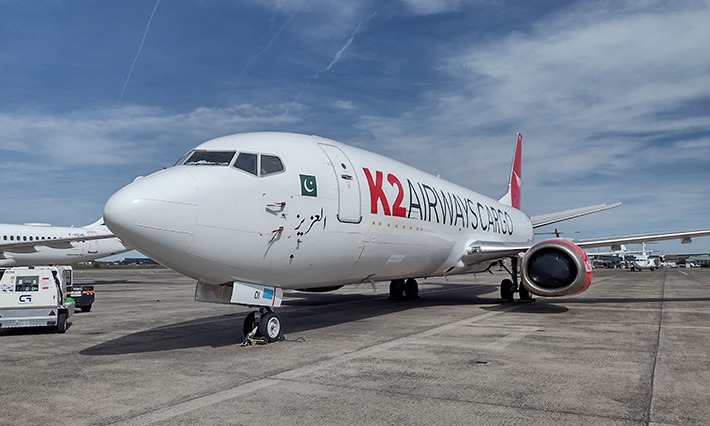
7 July 2026 | Boeing 737-400SF | K2 Airways Flight 1732 | Arabian Sea
Asia 🔴 Red an Pakistan Airports Authority reports a K2 Airways 737-400SF cargo flight as crashing into the Arabian Sea after loss of navigation systems, with five occupants on board and wreckage reportedly located after 12 hours. This item requires caution because authoritative primary-source reporting remains limited in the material reviewed for this edition.
Severity: Reported fatal accident, verification still limited
8 July 2026 | Regional airline operations | Iran/Iraq/Lebanon airspace | Middle East
EASA instructed operators to avoid the airspace of Iran, Iraq, and Lebanon until 31 August, citing continued high tensions and the potential for further military action. This is a major operational safety development for carriers routing Europe–Asia traffic.
Severity: Strategic airspace risk
India Safety Watch
Mumbai also remained under stress after the weekend monsoon disruption, with 17 cancellations and 365 delays reported through 6 July, plus diversions affecting both domestic and international flows. That keeps India at RED not because of a fresh fatal airline accident, but because the country’s safety environment this week combined a major unresolved catastrophe report with sustained hub-level weather fragility.
Investigation Update
FRANCE PC-6 CRASH
The 28 June Pilatus PC-6 crash near Nancy remains under investigation, with European reporting emphasizing that the aircraft had no black boxes and that investigators are relying on tower communications, radar traces, maintenance records, witness statements, and available photo/video evidence. Authorities have described it as one of France’s worst recent general-aviation accidents by loss of life.
Regulatory Watch
The most consequential regulatory-style development for this issue is the AI171 preliminary report itself, because it changes the factual baseline of the global discussion from speculation about engines or maintenance to a much narrower focus on cockpit switch movement and sequence timing.
Safety Data Point
Mumbai disruption tally: Indian reporting said that between midnight and late afternoon on 6 July, Mumbai airport saw 17 flight cancellations, five diversions, and 365 delayed flights, with nearly 89 percent of departures running late and average departure delays around 72 minutes. That makes monsoon weather — not a technical failure — the single biggest direct operational safety stressor inside India this week.
Safety Story
Aviation Incident Reporting is a way to ensure safety for the future generations, it reframes safety conversations around cockpit ergonomics, switch guarding, cross-monitoring, procedural design, and how quickly crews can detect and reverse an anomalous configuration during the most unforgiving phase of flight. The safety report shifts the industry from broad theories toward an intensely specific human-machine interface question.
Weather & Airspace Hazards
India monsoon: Mumbai remained the main weather-driven disruption point, with severe rainfall continuing to affect schedules into 6 July and spillover risk for connected airports such as Pune and Goa. Middle East airspace: EASA’s bulletin advising operators to avoid Iran, Iraq, and Lebanon until 31 August is now one of the most important strategic routing constraints for long-haul operators in the region. West and Central India: Active monsoon conditions continue to raise risks of low visibility, standing water, windshear, unstable approaches, and diversion pressure at major hubs, even where runway closures are avoided. Volcanic ash: No major ash-driven Asia-Pacific network disruption was clearly confirmed in the material reviewed for this edition.