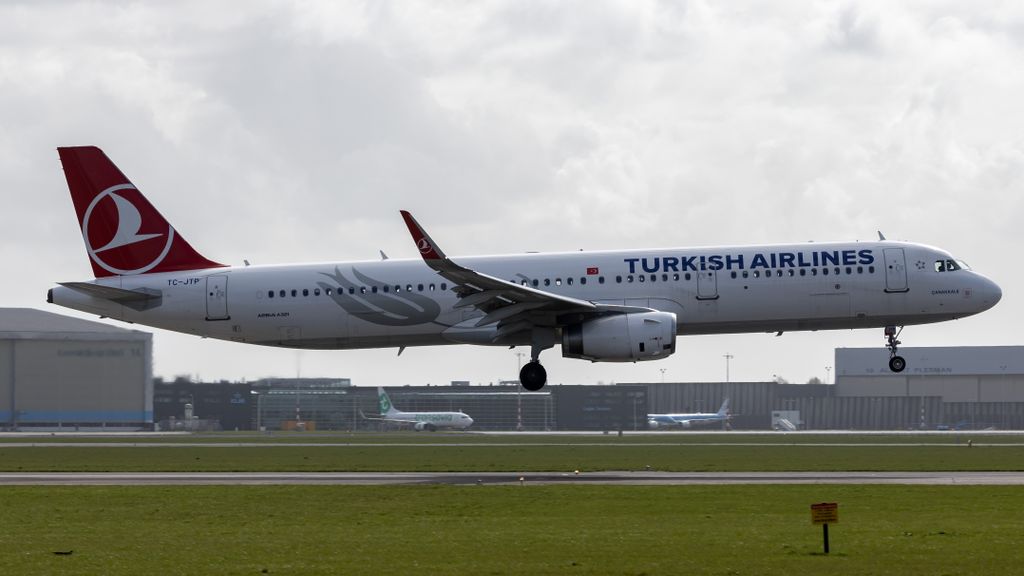
Turkish Airlines flight TK663 left Istanbul for Tunis and did not stay in the Tunis-Carthage approach. Flight-status records mark the 10 September service as diverted. Passenger video that circulated on 12 and 13 September shows a cabin in hard weather, with people shouting as the aircraft moved through what they described as a sudden drop. One passenger wrote that the third attempt felt like the aeroplane had started to plummet. Al Jazeera and Al Arabiya ran the clip. Local and Turkish aviation sites said the crew tried more than once at Tunis-Carthage in a storm and then went to Enfidha-Hammamet. Turkish Airlines had not, in the public record available at the time of writing, issued a detailed operational statement naming aircraft type, weather minima, injuries or the exact number of approaches. Treat the passenger account as a passenger account. It is not an accident report.
What the crew did is the part that matters for other airlines. An approach is stable only when the aircraft is on the right path, at the right speed, in the right configuration, with the runway in sight or the procedure complete, by a defined height. Wind shear, a convective cell on short final, or a sudden change in headwind can take all of that away in seconds. The correct answer is a go-around. A second go-around is still the correct answer if the conditions have not improved. A diversion is the correct answer when fuel, weather and the chance of a third unstable attempt no longer add up. Enfidha sits on the same coast with a longer weather window for many Mediterranean storms. Taking the aircraft there is not a failure of the first airport. It is the system working. Cabin service should already have been stopped and belts on before the first approach in that weather. Injuries, if any, would most likely have come from unbelted movement, not from the decision to leave Tunis behind. None of that has been confirmed by the airline or by Tunisian investigators in the material published so far.
The video will travel farther than the procedure. Passengers hear engines spool and feel a pitch change and call it a fall. Pilots call it a missed approach. The distinction is why airlines brief go-arounds as a normal manoeuvre and why dispatchers file an alternate before the aircraft ever leaves Istanbul. Until Turkish Airlines or the Tunisian authority publishes the weather, the number of attempts and the medical outcome, the responsible reading is this. The flight did not force a landing on an unstable approach. It left. That is what the book says to do.
Turkish Airlines flight TK663 left Istanbul for Tunis and did not stay in the Tunis-Carthage approach. Flight-status records mark the 10 September service as diverted. Passenger video that circulated on 12 and 13 September shows a cabin in hard weather, with people shouting as the aircraft moved through what they described as a sudden drop. One passenger wrote that the third attempt felt like the aeroplane had started to plummet. Al Jazeera and Al Arabiya ran the clip. Local and Turkish aviation sites said the crew tried more than once at Tunis-Carthage in a storm and then went to Enfidha-Hammamet. Turkish Airlines had not, in the public record available at the time of writing, issued a detailed operational statement naming aircraft type, weather minima, injuries or the exact number of approaches. Treat the passenger account as a passenger account. It is not an accident report.
What the crew did is the part that matters for other airlines. An approach is stable only when the aircraft is on the right path, at the right speed, in the right configuration, with the runway in sight or the procedure complete, by a defined height. Wind shear, a convective cell on short final, or a sudden change in headwind can take all of that away in seconds. The correct answer is a go-around. A second go-around is still the correct answer if the conditions have not improved. A diversion is the correct answer when fuel, weather and the chance of a third unstable attempt no longer add up. Enfidha sits on the same coast with a longer weather window for many Mediterranean storms. Taking the aircraft there is not a failure of the first airport. It is the system working. Cabin service should already have been stopped and belts on before the first approach in that weather. Injuries, if any, would most likely have come from unbelted movement, not from the decision to leave Tunis behind. None of that has been confirmed by the airline or by Tunisian investigators in the material published so far.
The video will travel farther than the procedure. Passengers hear engines spool and feel a pitch change and call it a fall. Pilots call it a missed approach. The distinction is why airlines brief go-arounds as a normal manoeuvre and why dispatchers file an alternate before the aircraft ever leaves Istanbul. Until Turkish Airlines or the Tunisian authority publishes the weather, the number of attempts and the medical outcome, the responsible reading is this. The flight did not force a landing on an unstable approach. It left. That is what the book says to do.