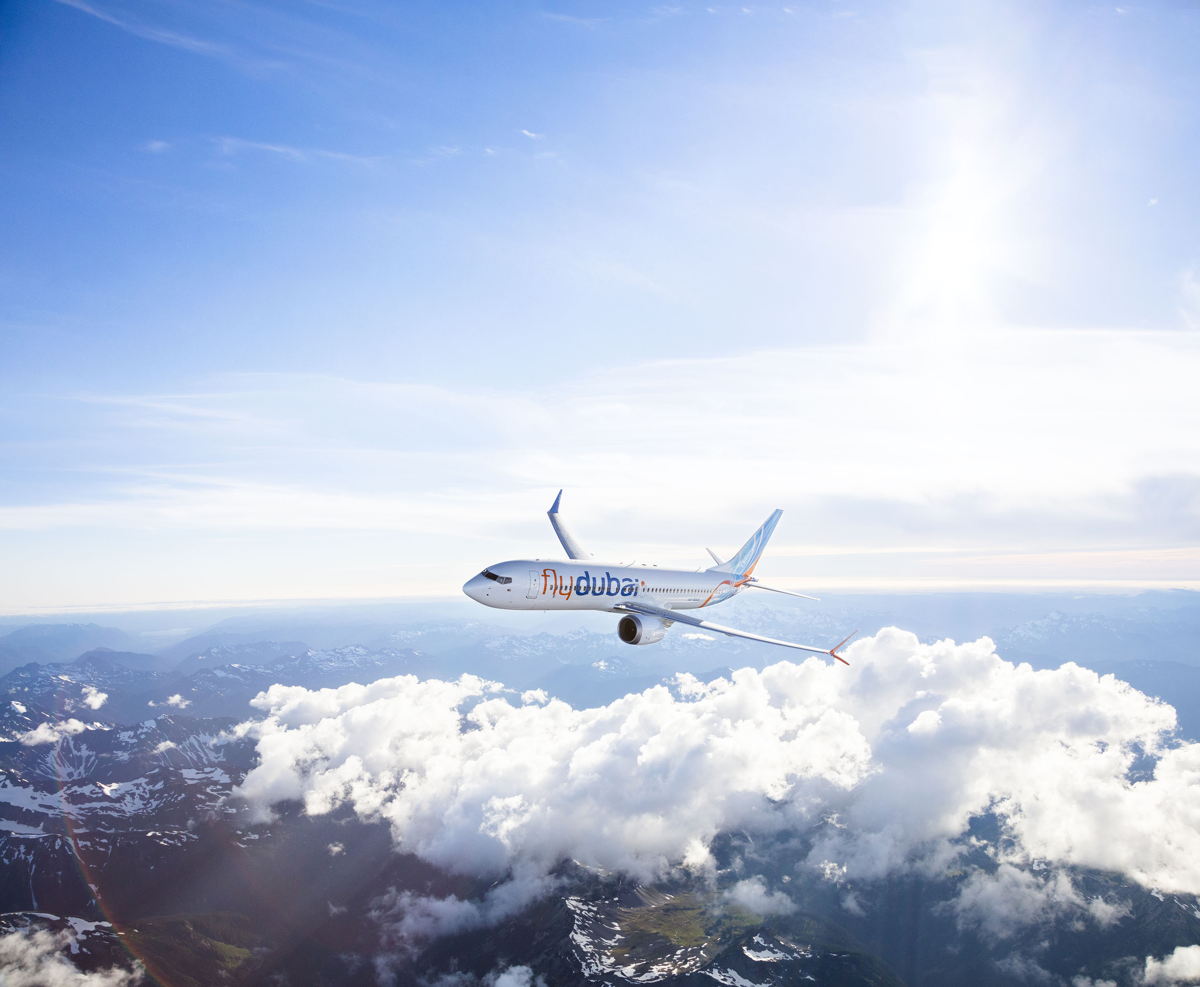
The most extraordinary fact about flydubai Flight FZ1073 may not be the cockpit violence that triggered its emergency. It is that a Boeing 737-8 survived an extreme descent, apparent overspeed and major rudder damage, then landed safely at Tabuk Airport.
Tailwind Times recently reported that the aircraft exceeded design limits during the September 30 dive and demonstrated notable structural resilience despite significant rudder damage. But the investigators have not yet published flight-data-recorder findings, cockpit-voice-recorder evidence, a structural teardown or an official account of the damage sequence.
The central engineering question is not whether the aircraft was 'strong enough' in a generic sense. It is which combination of airframe strength, control-system redundancy, remaining directional control and crew recovery allowed a badly stressed aircraft to return to the ground.
A descent outside normal margins
Publicly cited tracking estimates indicate that the 737-8 lost roughly 17400 feet in about 92 seconds, at a reported nose-down attitude near 39 degrees. It nosedived at an estimated peak near Mach 0.96 and a recovery that may have imposed loads around 3 G. None of those figures is yet recorder-validated.
What is clear is that the reported event lies far outside routine airline operations. A normal commercial descent is typically shallow and managed; a 39-degree nose-down path would be closer to an emergency manoeuvre than an airline descent profile. At high speed, aerodynamic forces increase quickly because dynamic pressure rises approximately with the square of airspeed. A modest further increase in speed can therefore create a much larger increase in load on a control surface.
That is particularly relevant to the rudder. The rudder is the movable surface on the vertical tail that controls yaw, the aircraft’s movement about its vertical axis. At high speed, abrupt or sustained rudder deflection can impose very large loads on the rudder, its hinges, actuators and the vertical stabiliser structure behind it.
Photographs taken after landing appear to show substantial loss or damage to the upper rudder. They establish that the aircraft reached Tabuk with major visible tail damage. They do not establish when the damage occurred, whether it was caused by aerodynamic overload, flutter, control inputs, a pre-existing defect or another mechanism. That is a question for investigators and engineering inspection.
Design limits are not cliffs
Airliners are certified to defined structural and operating limits, but those limits are not a line beyond which an aircraft instantly disintegrates. They are the boundaries for normal operation with regulatory design margins above them.
The 737 MAX’s published manoeuvring load-factor limit is generally associated with a positive 2.5 G design envelope for the transport-category aeroplane baseline. Reports of an estimated 3 G recovery therefore deserve close forensic attention. Actual loads must come from the flight data recorder and subsequent structural assessment.
The same applies to reported speed. Reports have suggested an estimated Mach 0.96, much higher than the Mach limit normally associated with the 737 family. The speed limit of Boeing 737 MAX is Mach 0.82 which is 870 km/h or 470 knots. But the aircraft was nose-diving at 0.96 Mach is approximately 1,176 kilometers per hour. A single reconstructed speed point does not reveal the full engineering picture. Investigators will need altitude, temperature, calibration, pitch, Mach, control-surface position, acceleration, turbulence and the duration of the exposure before determining what loads the aircraft actually carried.
Aviation is full of margins by design. But margins are not invulnerable. They are the structure’s last line of defence when operations depart from the planned flight path.
The 737 MAX has multiple layers of flight-control architecture, including redundant flight-control computers and independent systems designed to maintain controllability after certain failures. The FAA’s MAX return-to-service review focused extensively on changes to the Maneuvering Characteristics Augmentation System, sensor inputs, flight-control-computer logic and crew procedures; it also required both flight-control computers to be functional for dispatch.
The safe landing therefore may reflect several layers working together-a structurally survivable fuselage and wing, intact primary control paths, sufficient remaining vertical-tail effectiveness, stable engines, functioning avionics, and effective pilot action after the immediate cockpit threat was contained. That is an engineering hypothesis, not an official conclusion.
The crew-response factor
Aircraft design buys time. Crews use it.
The jet’s survival cannot be understood solely as a Boeing airframe story. The recovery, stabilisation and diversion required the people in the aircraft to regain control of an abnormal situation and convert whatever control authority remained into a landing at Tabuk.
The UAE Attorney-General has said the first officer attacked the captain and tried to take control of the aircraft. Public reporting says crew and passengers restrained the first officer, after which the aircraft was diverted. The technical investigation will need to establish who handled the controls during each phase, what inputs were made, how the aircraft was recovered, and what emergency or abnormal procedures were used.
This is where the aircraft’s operational design intersects with human factors. A robust aeroplane provides stable handling qualities, warnings and redundancy. But violent disruption in the flight deck can remove the orderly decision-making environment that certification assumptions normally expect. Investigators will be looking not only at the controls themselves but also at how people were able to use them under extraordinary conditions.
What investigators will examine
The aircraft should now be treated as evidence, not as a symbol of resilience. The investigation will likely examine primarily the flight-data-recorder and cockpit-voice-recorder data, including speed, altitude, pitch, bank, load factor, autopilot status, control positions and warnings. Rudder, vertical-stabiliser, hinge and actuator damage, including fracture surfaces and attachment points.
The distinction between damage observed after landing and failure mechanism is crucial. The rudder may have failed because of high dynamic pressure and control load, it may have been affected by flutter, it may have been damaged by a different process.
The outcome could have implications beyond one aircraft. If investigators conclude that the 737-8’s structural margin and residual control authority were central to the survival, Boeing and regulators may study whether existing certification assumptions adequately capture rare but severe upset scenarios.
The aircraft was not designed for this day
The right conclusion is not that a 737 MAX can survive any extreme dive. It cannot. Nor is it that the event proves a particular system caused or prevented catastrophe.
The emerging evidence suggests that FZ1073 reached an extreme and abnormal part of its flight envelope, suffered conspicuous rudder damage and remained sufficiently controllable to land.
Until the official investigation reports, that is the most accurate aviation metaphor for FZ1073n is 'not an indestructible aeroplane, but a damaged system that found enough remaining margin to stay airborne long enough to reach a runway'.