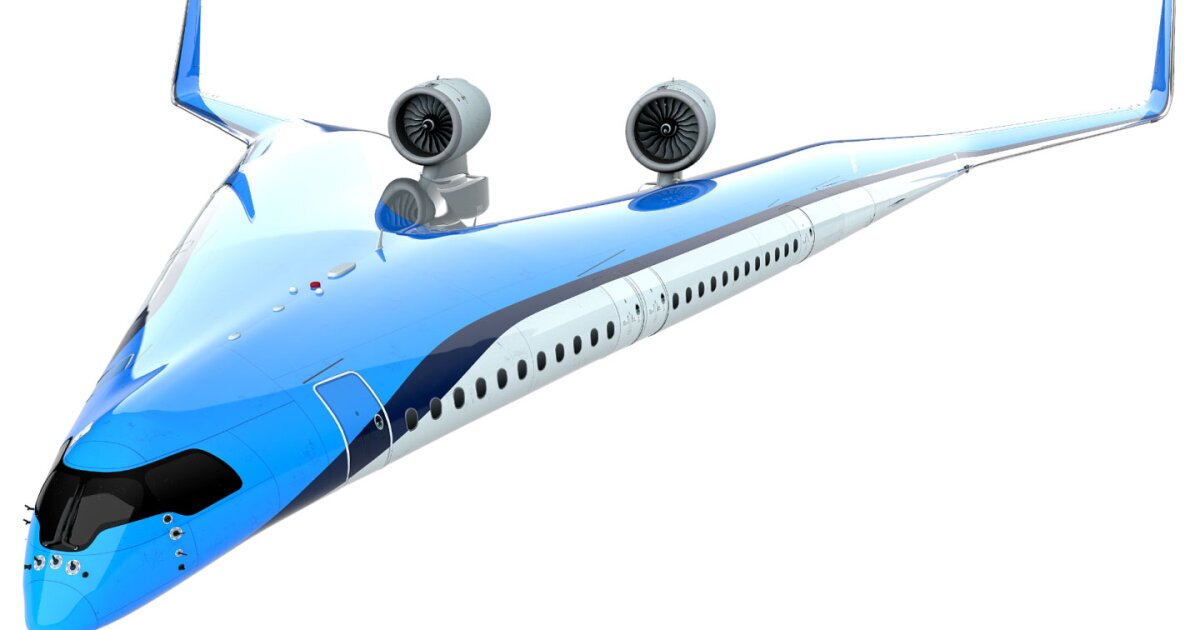
High above the testing grounds and inside the laboratories of Delft University of Technology, a team of dedicated engineers and scientists is methodically shaping one of the most ambitious aircraft concepts in modern aviation. The Flying-V, a radical V-shaped long-haul jet developed in close partnership with KLM Royal Dutch Airlines, continues to advance through rigorous research and simulation work even as it remains years away from carrying its first passengers.
As of today, the project sits firmly in the advanced research and validation stage. No full-scale prototype has taken to the skies yet, but progress on stability, controllability, and aerodynamics remains steady. Researchers at TU Delft are using data from earlier subscale flights and sophisticated computer models to refine the aircraft’s unique flying-wing configuration, where the passenger cabin, cargo hold, and fuel tanks are seamlessly integrated into the broad V-shaped wings. Recent tests, including work at facilities like Twente Airport, focus on fine-tuning how the aircraft behaves in real flight conditions, addressing everything from low-speed handling to transonic performance.
Engineers and scientists are building this future machine piece by piece through a powerful blend of theory and practice. Aerodynamicists employ advanced computational fluid dynamics to sculpt the wing shape for minimal drag. Structural specialists experiment with lightweight composite materials to shave weight off the airframe. Human-factors experts design innovative cabin layouts featuring angled seating, lounge areas, and even horizontal sleeping options in economy class. Control systems teams develop sophisticated fly-by-wire software to compensate for the inherent challenges of a tailless design. Students and PhD candidates work alongside seasoned professors like Dr. Roelof Vos, turning the project into a living laboratory of innovation.
The advantages of the Flying-V are compelling and could make it a truly great flying machine. Computer models and early tests suggest it could burn up to 20% less fuel than today’s efficient Airbus A350 while carrying a similar number of passengers — around 314 to 361 — along with substantial cargo. Its compact overall length but A350-comparable wingspan means it can operate from existing airport gates and runways without costly infrastructure upgrades. The integrated design reduces structural weight and wetted surface area, promising lower operating costs, reduced emissions, and excellent compatibility with sustainable aviation fuels or future hybrid propulsion systems. If realized at scale, the Flying-V could help long-haul aviation meet tough climate targets while offering passengers a more spacious and creative cabin experience.
Yet challenges remain significant. The V-shaped configuration demands advanced flight controls to ensure rock-solid stability, especially during takeoff, landing, and turbulence. Engineers continue to tackle issues such as “Dutch roll” tendencies observed in early model flights. Cabin integration brings its own puzzles — from optimal window placement and boarding flows to rapid emergency evacuation standards. Certification of such a novel aircraft design will require extensive validation, while securing a full industry consortium for manufacturing and the massive investment needed for development adds commercial risk.
Despite these hurdles, many involved believe the Flying-V’s potential outweighs the difficulties. Its success could mark a genuine leap in sustainable aviation, inspiring new generations of aircraft and positioning European expertise at the forefront of green flight technology.
The story of the Flying-V began years earlier. The original concept emerged from a 2014 master’s thesis by Justus Benad. TU Delft’s team, under Dr. Roelof Vos, began refining it seriously around 2016-2017 with improved aerodynamic features. The formal collaboration with KLM was publicly launched in June 2019 as part of the airline’s 100th anniversary and its “Fly Responsibly” sustainability drive. A scale model and interior mock-up generated global excitement that year, followed by a major milestone in summer 2020 when a 3-metre-wingspan remote-controlled prototype successfully flew in Germany.
Six years on from that public debut, the project moves forward with quiet determination. While passengers may not step aboard a Flying-V until the 2040s at the earliest, the ongoing research is already producing valuable knowledge that could influence the next chapter of commercial aviation. In an era of rising travel demand and urgent environmental pressure, the engineers in Delft are proving that sometimes the boldest ideas take flight not with a roar, but with patient, persistent progress.