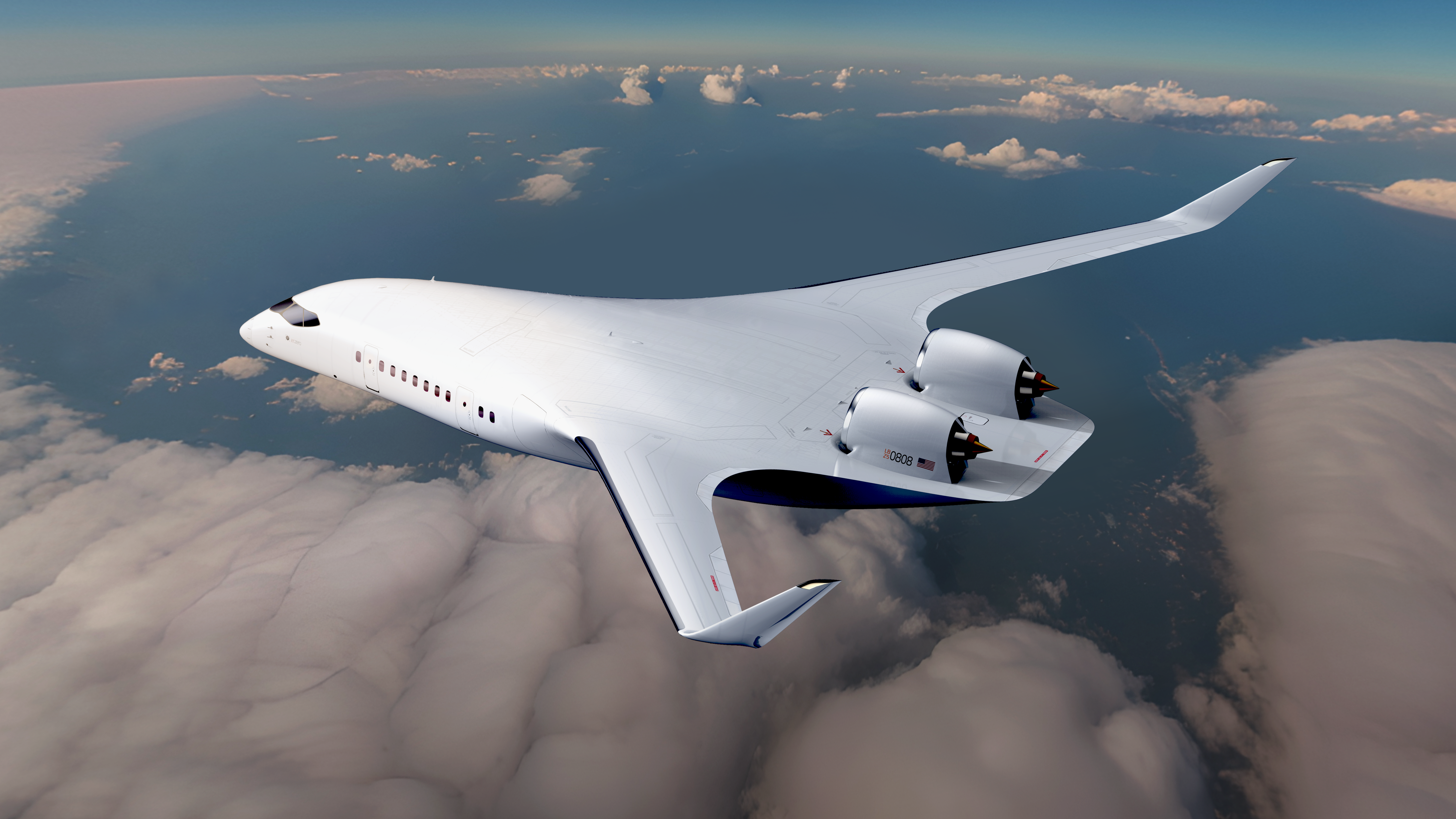
JetZero’s full-scale blended‑wing jet taking shape in a Mojave hangar is the most serious attempt in decades to break out of the tube‑and‑wing template and, by extension, to prise open the Airbus‑Boeing duopoly, from a place far outside Toulouse or Seattle.
In a cavernous hangar at Mojave Air & Space Port in California, JetZero is assembling a full‑size blended‑wing‑body demonstrator backed by the U.S. Air Force and the FAA’s experimental certificate system. The aircraft merges fuselage and wing into a single lifting surface-a triangular, flattened body that blends into the wings, with engines mounted high and aft.
This demonstrator nicknamed Pathfinder at sub‑scale is the precursor to JetZero’s planned Z4/Z5 family, a 200‑250 seat middle of the market jet aimed squarely at the segment now occupied by the Boeing 767, 787‑8 and Airbus A321LR/XLR. The company, founded in 2021 and headquartered in Long Beach, has a timeline that calls for a 12–13%‑scale Pathfinder flying now in Southern California under FAA experimental approval. A full‑scale blended‑wing demonstrator built by Scaled Composites in Mojave and flying by about 2027 under a $235 million U.S. Air Force contract. A certification prototype around 2029 and an airline‑ready Z4 entering service in the early 2030s, if regulators, investors and customers all hold their nerve.
It is, in other words, a program that stretches from a desert hangar to a planned $4.7 billion manufacturing campus in Greensboro, North Carolina, where JetZero says it will eventually build production aircraft and employ over 14,000 people.
Blended‑wing‑body (BWB) concepts have lived in wind tunnels for decades; NASA and Boeing flew the X‑48 family of sub‑scale demonstrators in the 2000s. The appeal is straightforward physics. The whole body produces lift, so you can generate the same lift with less wetted area and drag. - Eliminating the conventional tail and merging the wing into the fuselage cuts structural weight. [
JetZero claims that its BWB Z4 could cut fuel burn and emissions by up to 50% compared with today’s mid‑market widebodies, such as the 767 and 787‑8, while using current‑generation high‑bypass engines already in service on narrowbodies. The U.S. Air Force, in its own analysis, cites a roughly 30% drag reduction and significantly increased range for tanker and transport missions, explaining why it is funding the demonstrator as a potential future refuelling platform.
JetZero’s strategic bet is that airlines and air forces need big efficiency gains now, not in the distant future, and that pairing a radically more efficient airframe with proven engines is a faster route than waiting for hydrogen or all‑electric propulsion to mature.
The current Mojave work is JetZero’s pivot from small models to a full‑size flying article, the step where many ambitious concepts have failed. The test aircraft, around 56 metres in span and sized for roughly 200 seats, is designed to validate stability and control of a tailless, all‑wing airliner in real atmospheric conditions.
A successful flight campaign around 2027 is the gating item for serious airline orders and the massive capital required to industrialise a new airframe from scratch.
In that world, Mojave would be remembered less as a curiosity than as the desert hangar where the post‑tube era began. Whether JetZero can carry its blended‑wing jet from Pathfinder to production is still an open question, but it has already done something rare. It has forced Airbus, Boeing, regulators and airlines to confront the possibility that the next big jet might not look like a cigar with wings at all.