'THE SKY REMEMBERS' SERIES:
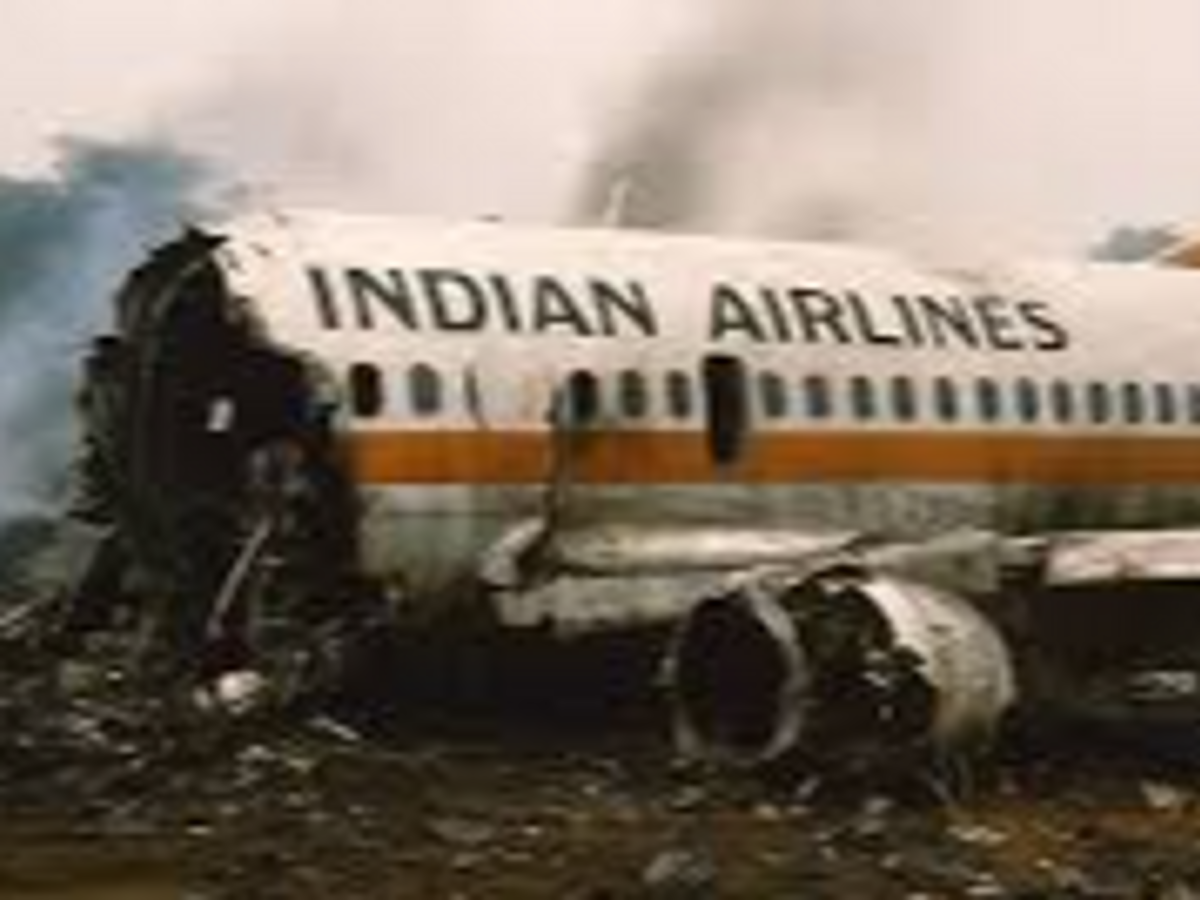
At 6:53 on the morning of October 19, 1988, Indian Airlines Flight 113 struck trees and a high-tension electricity pylon on approach to Ahmedabad. The Boeing 737 then crashed into a field near Chiloda Kotarpur and caught fire. Of the 135 people on board, 133 died.
Thirty-eight years later, the accident should not be reduced to a line in an aviation-anniversary calendar or the blunt shorthand of 'pilot error'. Flight 113 was a preventable controlled-flight-into-terrain crash in poor visibility, shaped by cockpit decisions, incomplete information from air traffic control, inadequate airport approach infrastructure and a failure to stop the approach when its safety margins had disappeared.
What was the final approach? Flight IC-113 had left Bombay, now Mumbai, for Ahmedabad with 129 passengers and six crew members. The aircraft, Boeing 737-2A8 VT-EAH, arrived in deteriorating visibility on the morning of October 19.
At 6:20 am, the crew asked Ahmedabad tower for a weather report after visibility fell from about 3.7 miles to 1.8 miles. At 6:32 am, air traffic control cleared the aircraft to descend to 15000 feet and asked it to report when it reached 1700 feet over the Ahmedabad VOR, a radio-navigation beacon used to guide approaches.
The crew chose a localiser-DME approach to Runway 23. This was not a fully guided precision approach but the localiser gives left-right guidance, while distance-measuring equipment helps establish position. In poor visibility, it places a heavy burden on disciplined altitude control, standard call-outs and an immediate missed approach if the runway or required visual references are not in sight.
The aircraft should not have descended below the minimum descent altitude without the runway environment or approach lights visible. The inquiry found that it did. It also found that the crew did not make the required standard altitude calls and continued seeking the runway visually rather than properly monitoring instruments and flight path.
At about 6:53 am, the aircraft was flying too low and too fast. It struck trees, hit a high-tension pylon and crashed about 2.5 km from the runway threshold.
Five passengers initially survived the impact. Three later died of their injuries. Two people survived a textile businessman Ashok Agarwal and Vinod Tripathi, then vice-chancellor of Gujarat Vidyapith.
It was not only a pilot error. The Court of Inquiry identified errors of judgment by the captain and co-pilot and their non-adherence to prescribed procedures in poor visibility. That finding is essential, not optional. The crew continued an approach below the safe minimum without the necessary visual cues and did not execute the missed approach.
But the official record and subsequent reporting also point to contributing failures on the ground. Ahmedabad’s Instrument Landing System was not functioning, its approach lights were inoperative, and runway visual range measurements were not provided to the crew as visibility deteriorated. The airport operator also failed to communicate the worsening visibility adequately, according to reporting on the inquiry’s findings.
This is why Flight 113 is best understood as composite failure. The final fatal act occurred in the cockpit, but the safety system around the crew was weak when it most needed to be strong.
A well-designed aviation system anticipates that human beings will make mistakes under pressure. It builds barriers such as accurate weather data, functioning approach aids, stable-approach criteria, compulsory call-outs, independent cockpit monitoring, clear go-around rules and airport rescue capability. When several barriers fail at once, a routine arrival can become a catastrophe.
The Lesson Flight 113 taught
The first lesson is the most basic, in poor visibility, an approach must be flown by the published procedure, not by hope. A minimum descent altitude is not a target to be negotiated downward. It is the lowest point at which a crew may continue without the required visual references. If the runway, approach lights or other defined cues are not visible at that point, the correct decision is to go around. The inconvenience of a missed approach is always smaller than the consequence of descending into terrain.
The second lesson is cockpit monitoring. One pilot may be focused on acquiring visual cues outside and the other must keep the aircraft inside the safe envelope. Altitude, speed, vertical path, configuration and call-outs must remain actively monitored. Flight 113 illustrates the danger of both pilots becoming absorbed in the same task, trying to find the runway.
The third lesson is that air traffic control and airport systems are part of the safety chain. Controllers should give crews timely, accurate visibility information. Airports need functioning runway lights, approach lighting, navigation aids and reliable runway-visual-range reporting, especially during conditions in which pilots cannot safely rely on their eyes.
The fourth lesson is that rescue and firefighting capability matters after impact. The crash involved a large fuel-fed fire, and later reporting said inadequate firefighting services worsened the consequences. Survivability is not determined only at the point of impact; it is also shaped by how quickly rescue services reach passengers and whether they can control the fire.
Could it happen again?
The exact chain of Flight 113 should be harder to repeat today. Indian airline operations have changed substantially since 1988. Modern airliners typically have enhanced ground-proximity warning systems, terrain-awareness and warning systems, more advanced flight-management computers, better weather information, improved cockpit-resource-management training and more developed all-weather-operating procedures.
These improvements are designed to prevent controlled flight into terrain. A modern terrain-warning system can issue urgent alerts if an aircraft is approaching terrain or obstacles. Standard operating procedures are more explicitly built around stabilised approaches and mandatory go-arounds. Contemporary cockpit-resource-management training places greater emphasis on challenge-and-response, mutual monitoring and the authority of either pilot to call for a go-around.
But 'harder' is not the same as impossible.
Controlled flight into terrain remains a global aviation hazard when weather, pressure to land, incomplete information, degraded infrastructure and human fixation converge. An aircraft can still be serviceable, crewed and under control while flying toward the ground in an unsafe profile. Technology creates another barrier, it does not remove the need to respect procedures.
India’s risk is also uneven. Major airports have advanced instrument approaches, runway-visual-range equipment, better lighting and modern rescue systems. Smaller or weather-affected airports can still face infrastructure, staffing and procedure challenges. The relevant question is not whether Delhi or Mumbai can handle low visibility. It is whether every airport at which scheduled airlines operate has the equipment, reporting discipline, obstacle protection and contingency planning appropriate to its traffic and weather.
Flight 113 is remembered unevenly. Its victims are not part of India’s living aviation memory in the way some later tragedies became. Yet this crash took 133 lives, including families and children travelling on an ordinary domestic morning flight.
For Ashok Agarwal, survival carried its own burden. He lost his wife and infant daughter in the crash and reportedly lived for years with trauma and memory loss before his death in 2020.
Aviation safety depends on institutional memory. Accident reports should not explained as old documents consulted only after another disaster. They should be part of recurrent training, airport oversight, emergency exercises and public accountability.
On October 19, 1988, Flight 113 did not fail because aircraft were inherently unsafe. It failed because safety margins were allowed to erode at the exact point where they mattered most.
The enduring instruction is simple, when the runway cannot be seen, the aircraft must not continue descending toward it.