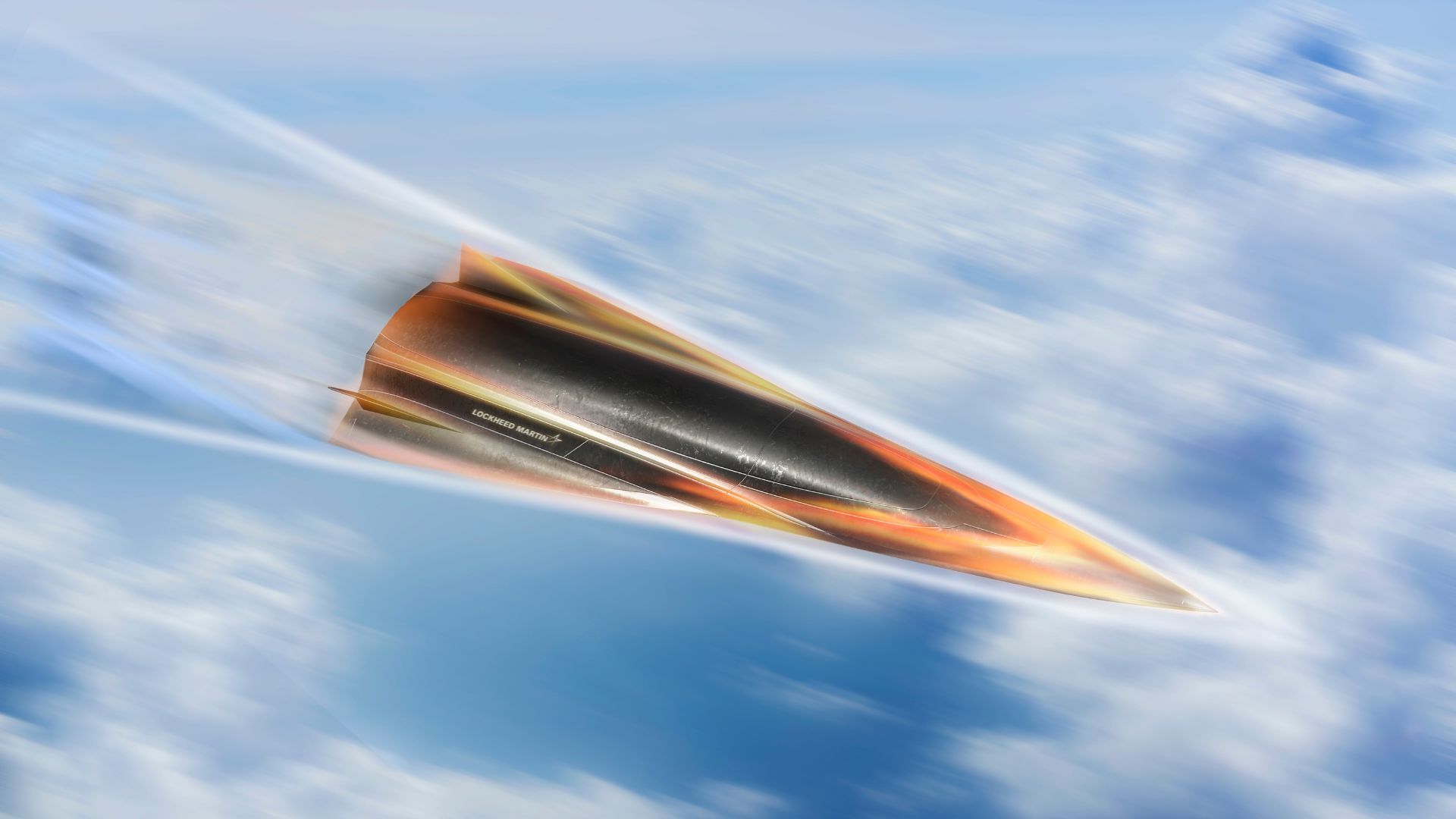
The Pentagon has selected Anduril, Lockheed Martin and Ursa Major for initial work on a next-generation hypersonic prototype programme. That is not the finish line for a new weapon. It is the beginning of a harder contest, whether the United States can make extreme speed systems in useful numbers, at a price it can sustain.
Hypersonic has become shorthand for speed above Mach 5. But speed is only the most visible part of the engineering. A vehicle travelling that fast must survive intense heating, maintain guidance through a hostile environment, communicate enough data for testing, and perform reliably after being stored, transported and launched.
A prototype can mean several things. It may be a flyable vehicle. It may be a rocket motor test, a thermal protection structure, a guidance package or an integrated demonstrator. It is not necessarily an operational missile that can be produced, deployed, maintained and fired at scale.
That distinction matters because a successful test flight can be like a single clean takeoff. It proves the aircraft left the runway. It does not prove an airline can run the route every day in bad weather, with spare parts, trained crews and a workable timetable.
Propulsion must generate enormous energy without failing under extreme pressure and heat. Guidance systems must keep working through vibration, plasma effects and high temperature. Thermal protection materials must be produced consistently, not handcrafted for a small number of test vehicles. Telemetry must return enough information to explain a failure, but range access and tracking assets are limited. A shortage in any one system can stop the entire programme.
Anduril, Lockheed Martin and Ursa Major bring different models to the task. Lockheed has deep experience in classified missile integration, large programmes and military qualification. Anduril and Ursa Major represent the startup argument, that digital design, vertical integration, additive manufacturing and frequent testing can cut the time between design change and hardware.
Anduril has tested a solid rocket motor intended for U.S. Navy hypersonic work. Ursa Major has flown its Draper engine in the Air Force Research Laboratory’s Affordable Rapid Missile Demonstrator programme and says it is pursuing a system designed for high rate production.
The promise is not that startups can bypass verification. At hypersonic speed, rapid prototyping without rigorous testing is merely rapid failure.
The value of a faster industrial model is the ability to learn from failure quickly, build another article, alter the design and test again. Traditional prime contracting can deliver deep systems engineering and formal safety assurance, but it can also move slowly through requirements, approvals and long supplier chains. The Pentagon appears to be betting that the strongest programme will combine both disciplines.
A hypersonic weapon is not a drone assembled from commercially available components. It needs high-specification motors, specialty materials, precision manufacturing, secure electronics and controlled supply chains. The United States must also decide how much capacity it needs. A handful of weapons creates a demonstration. A credible stockpile requires factories, qualified workers, test equipment and suppliers prepared to produce for years.
More testing creates an aviation question too. Hypersonic tests depend on large restricted areas, range instrumentation, tracking aircraft and carefully managed airspace. Each launch can affect civil routes, military training schedules and commercial operations near ranges. The pressure will increase as testing becomes more frequent, especially around the Pacific, Alaska and Australia.
India faces a related challenge, though its programme remains far less transparent. DRDO demonstrated scramjet-powered hypersonic flight in 2020 and announced a test of a long-range hypersonic missile in November 2024. Public information does not establish production maturity or operational deployment.
China and Russia have fielded or claimed operational hypersonic capabilities, but much of their performance data remains classified or contested. The useful comparison is not who has the fastest public headline. It is who can sustain testing, produce reliable systems and maintain them under operational conditions.
Hypersonics are moving beyond the slide deck. The real measure of progress will be more prosaic, factories, materials, test ranges, telemetry and repeatable quality. At Mach 5, the weapon may fly fast. The industrial base behind it cannot afford to.