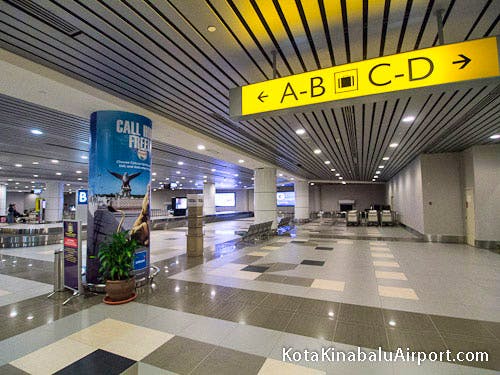
Kota Kinabalu International Airport shut its runway at 2.45 p.m. on 17 September 2026 for rectification work and the safety inspections that follow it. Malaysia Airports said a Notice to Airmen had been issued and that the strip would reopen when the checks and clearing were done. The first plan was two hours. A later notice pushed the window to 8 p.m. Continuous rain then slowed the work. Thunderstorm warnings covered parts of Sabah, including the West Coast and the diversion fields at Labuan and Sandakan, until 11 p.m. The runway was declared safe and reopened at 11.30 p.m., almost nine hours after it closed. That is the official sequence. What the operator has not published is the defect itself. Rectification and clearing are process words. They do not tell a dispatcher whether the problem was pavement, lighting, rubber, a foreign object or something that could return with the next downpour.
Twenty flights were marked affected, arrivals and departures together. That number is small by the standards of a Kuala Lumpur or Delhi outage and large for a single-runway tourism gateway whose afternoon bank is how Sabah connects to the peninsula and to China. Bernama’s check of the flight-information display around 5.40 p.m. showed delayed inbound services from Tawau, Johor Bahru, Kuala Lumpur and Guangzhou, and at least two arrivals from Lahad Datu and Labuan listed as cancelled. Airline sources said several inbound aircraft were sent to Labuan and Sandakan. Passengers already on the ground waited through the evening with little more than a board that kept changing. One traveller, held on a delayed Sandakan sector after a hospital appointment in Kota Kinabalu, told reporters he did not know how he would sit through another night in a chair. Others said they had boarded, sat, and been asked to get off. Those details are the operational reality of a runway that is also the only paved way in. There is no second strip to keep a reduced flow moving while the first is patched.
Reopening at 11.30 p.m. ended the airfield problem. It did not end the network problem. An aircraft that diverted to Sandakan is not in position for a dawn departure from Kota Kinabalu. A crew that burned duty time on the ground or on a hold is not legal for the first wave. A Guangzhou widebody that never arrived cannot leave on its booked turn. Passengers whose connections were built on an evening departure now need a hotel, a rebooked seat and a bag that may still be on a jet sitting on another island. Malaysia Airports’ last public line was the correct one and the incomplete one. Flight operations could resume. Passengers should check with their airlines. That is an admission that the airport can offer a runway and cannot offer a recovered timetable. Recovery belongs to the carriers, to ground handlers at the diversion fields, and to whether Labuan and Sandakan had the stands, fuel, buses and passenger-care capacity to absorb jets they were not scheduled to keep overnight.
The compounding factor was weather on a civil-works clock. A two-hour planned closure is a known product. Rain on open pavement and on inspection procedures turns a known product into an open-ended NOTAM. Secondary airports in monsoon belts live with that collision. Kota Kinabalu is the front door for Sabah’s leisure economy. An afternoon outage hits the same bank that moves resort guests, domestic workers and the China leisure flow that showed up on the delayed Guangzhou arrival. The lesson is not that eight hours is catastrophic. The lesson is that eight hours on a single runway, with the nearest usable alternates themselves under thunderstorm alerts, is long enough to scatter the next morning’s aircraft.
Indian tourism airports sit in the same geometry. Goa, Kochi, Guwahati, Bagdogra, Port Blair and the high-field strips that serve hill stations are one-runway businesses with thin spare metal and thin spare crew. A planned pavement job that meets an afternoon storm will produce the same pattern Kota Kinabalu produced. Diversions to fields that cannot hotel a full narrowbody. Duty-time expiry that cancels the first departure even after the runway is green. A public statement that operations have resumed while the display is still a list of delays. The planning questions are specific. Which alternate can take the largest aircraft on the day’s roster. Who pays for buses and rooms when the diversion airport is an hour’s flight away. Can ground power, catering and a spare crew be pre-positioned when a NOTAM slips from two hours to nine. Does the airport operator publish the nature of the defect once the strip is open, so airlines can judge whether the next rain will close it again.
Kota Kinabalu passed the first test. It found a safe surface and opened it the same night. The second test is quieter and lasts into Friday. It is whether the 20 affected rotations, the diverted tails and the passengers who slept in the terminal or in Sandakan are back inside the published schedule before the weekend leisure wave arrives. A runway can be inspected in an evening. A network cannot.