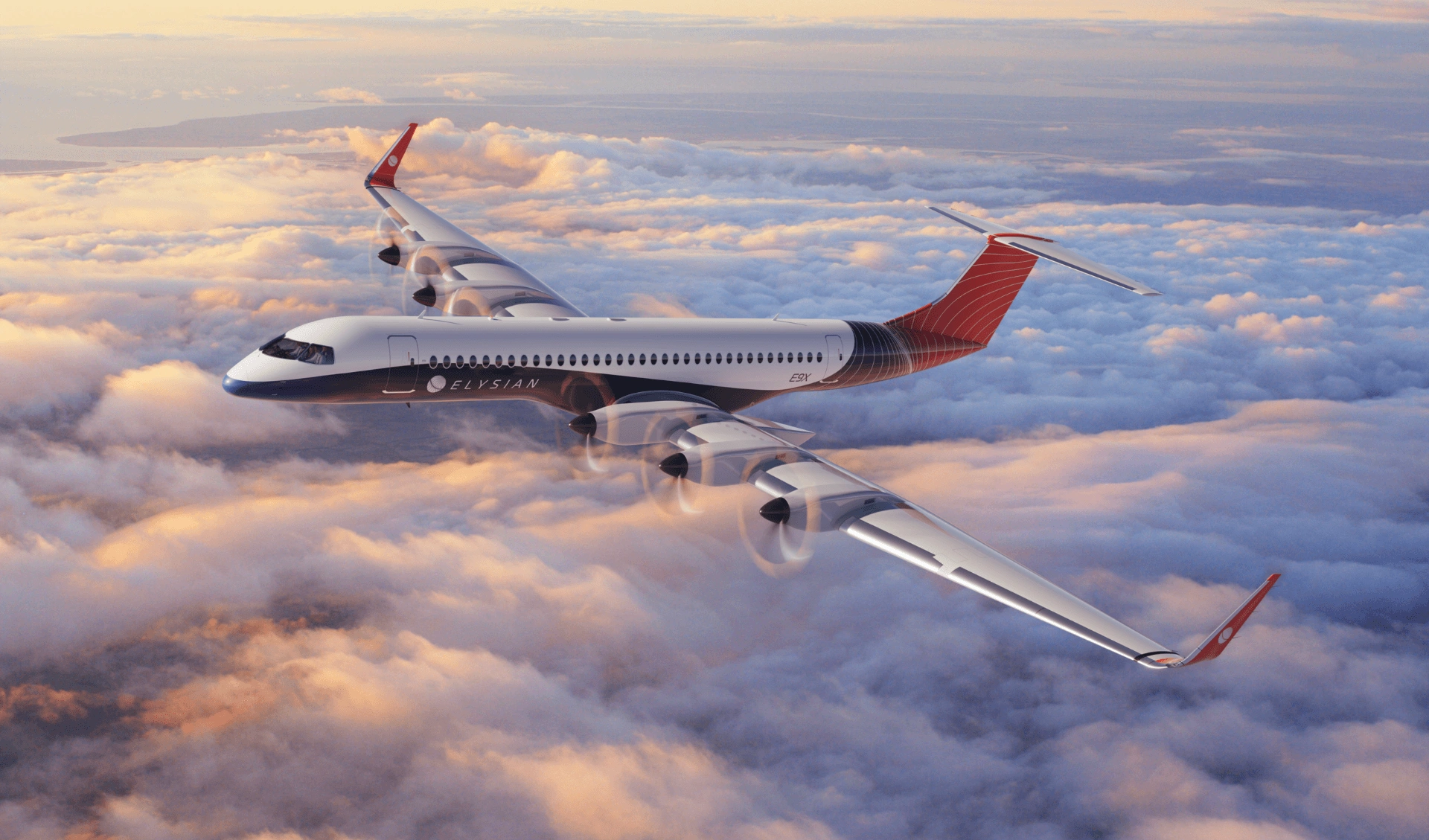
Elysian Aircraft is extending engineering developed for its proposed E9X battery-electric airliner into a Dutch defence project for next-generation uncrewed aircraft. The company and the Royal Netherlands Aerospace Centre, NLR, are leading a consortium working with the Royal Netherlands Air and Space Force on technology validation.
The project brings Elysian together with TNO, TU Delft, the Netherlands Defence Academy and Fokker Services Group. Announced on 6 November, it gives the electric-airliner developer a defence application for its aircraft-design expertise, while leaving the detailed technical requirements undisclosed.
“With this technology validation project, of which details are undisclosed, the parties are taking a first step toward new technical solutions for unmanned systems,” the air force said in the announcement.
Elysian’s contribution is the knowledge accumulated while developing the E9X, its proposed approximately 90-passenger electric aircraft. The company specifically identifies experience in rapid aircraft design and the integration of technologies into a complete aircraft concept.
“The technologies developed through the E9X provide a strong foundation for rapid technology development and synthesis for next generation unmanned aircraft,” said co-founder and chief technology officer Rob Wolleswinkel.
Elysian’s wider technology portfolio includes wing–battery integration, distributed electric propulsion, reusable battery packs, high-voltage systems and reserve-energy systems. It presents these as technologies with potential applications beyond the E9X, including commercial and military aircraft.
NLR brings multidisciplinary aircraft research and test facilities, including wind tunnels, a Drone Centre for uncrewed aircraft and scaled flight platforms, and flying laboratories. The announcement places those capabilities alongside Elysian’s design work and the participation of the Dutch air force.
NLR vice-president for aerospace vehicles Bert Thuis said the organisation would draw on its experience, expertise and facilities to achieve the project’s objectives. For now, the publicly defined task is technology validation rather than delivery of an operational aircraft.
Elysian describes the project as an award from the Dutch Ministry of Defence. Its announcement does not publish a contract value, funding allocation, project duration, payment schedule or dated technical milestones. It also provides no aircraft quantity, payload requirement, endurance target or operational role.
Elysian continues to present the aircraft on its website, with a stated capacity of 88–100 seats and a proposed range of 750 kilometres, with a path towards 1,000 kilometres.