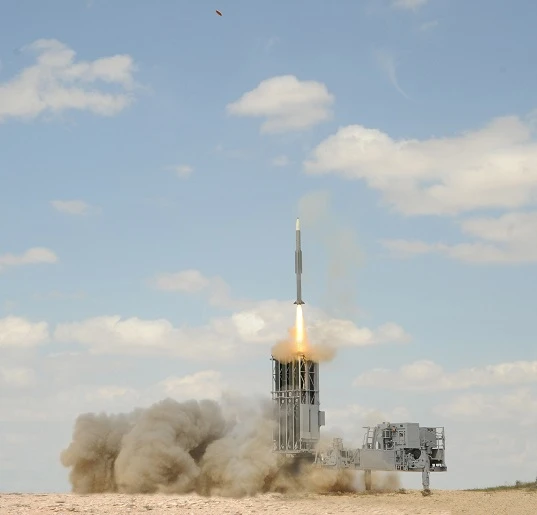
Greece signed a government-to-government contract in Tel Aviv on 31 August for Achilles’ Shield, an Israeli-built air and missile defence network worth about Euro 3 billion, or $3.5 billion. Israel will deliver Rafael’s David’s Sling and SPYDER, Israel Aerospace Industries’ BARAK MX, ELTA multi-mission radars and a Rafael command system whose source code Athens will own. A separate Euro 26 million order covers Rafael’s Drone Dome for sites that a ballistic interceptor cannot cheaply protect. Nineteen Greek firms already hold more than a quarter of the work, about Euro 750 million, with a production line planned at Tanagra. Implementation is set at 35 months. Greece calls itself the first EU state to stitch those Israeli layers into one national shield against ballistic missiles, aircraft and drones. Finland already bought David’s Sling. Germany bought Arrow 3. Athens bought the architecture. The same week, Pentagon paperwork confirmed Denmark had locked a second batch of 16 F-35As, taking the fleet to 43 by about 2030, even after a 270-volt battery fire on the Fort Worth line damaged a Danish jet still in assembly. Fighters and ground-based interceptors are no longer separate shopping lists. They are one bill for the sky above a country.
That bill looks like infrastructure because the product is a network, not a single launcher. Radars have to see low and slow drones and high and fast glide vehicles. Interceptors have to sit in magazines that can be replenished when a war burns stock. Command software has to talk to civil air-traffic control so a commercial corridor is not closed every time a sensor spikes. Counter-drone kits have to sit at airports, ports and power plants without turning every false alarm into a ground stop. Greece is buying that stack as a public work with an industrial offset, the way an earlier generation bought motorways. Denmark is buying more F-35s as the flying sensor and shooter that feeds the same stack. Europe has discovered that runways, terminals and tourist season mean little if a cheap unmanned aircraft can close the FIR. The customer is no longer only the air force. It is the finance ministry that prices closed airports.
Asia is already on the same invoice, whether the contracts are signed as one package or not. India is building Kusha as a domestic long-range layer beside Barak-8 and the Russian S-400, precisely so a sanctions problem does not leave the capital uncovered. Japan is designing the aircraft after the current generation around uncrewed teammates. South Korea has put AI and loyal wingmen into the study that follows the KF-21. Those programmes will fail as infrastructure if they stop at the fighter. The corridors that matter in a crisis are the ones that already carry passengers, Delhi and Mumbai, Haneda and Incheon, Changi and Suvarnabhumi, Manila and Tan Son Nhat. A drone that grounds 56 flights does not wait for a sixth-generation prototype. It waits for a legal jammer, a shared radar picture and a civil-military desk that can issue a NOTAM without emptying the terminal. Greece paid €3 billion to own that desk. Asian governments that still treat air defence as a parade item and airports as a tourist asset will pay the same money later, after the first cheap aircraft writes the specification for them.