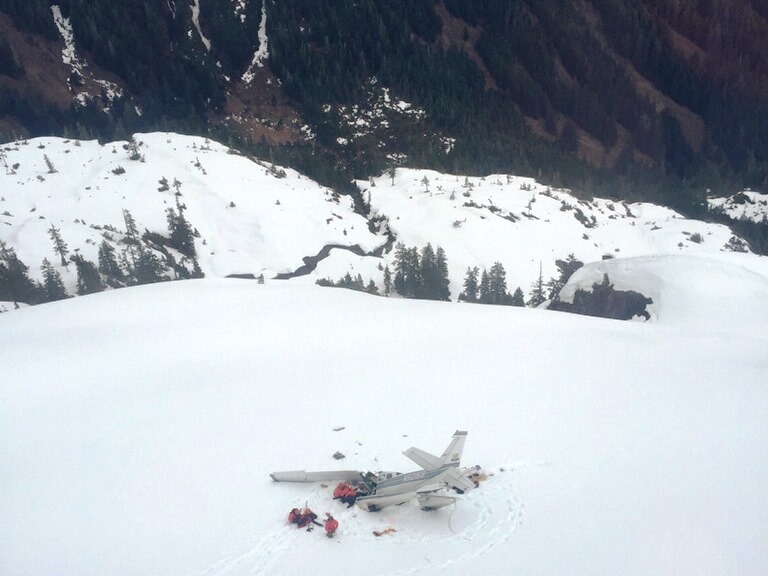
A light aircraft can have its engine at full power, its nose pointing upwards and still lack the performance to climb away from danger. French investigators have identified that pattern across accidents in which pilots remained at high angles of attack, sometimes without recognising why their aircraft would neither accelerate nor climb.
The Bureau d’Enquetes et d’Analyses has linked 21 light-aircraft accidents investigated between 2019 and 2025, probably or conclusively, to prolonged flight in what it calls the 'second regime', commonly described as flying behind the power curve. Eleven were fatal, killing 30 people. Within the study’s scope of aircraft below 2.25 tonnes maximum takeoff mass in France, the events represented 4% of accidents but 15% of fatal accidents.
They clustered around two situations. Ten occurred during takeoff or an interrupted approach or landing, when the aircraft was starting from low speed. Eleven occurred in mountainous terrain. In both settings, pilots could find themselves asking for more climb than the aircraft could provide.
The difficulty is that slowing down does not always reduce the power needed to remain airborne. At the faster end of the flight envelope, much of the resistance comes from pushing the aircraft through the air. At low speed, producing the required lift demands a higher angle of attack, increasing lift-related drag. Below the speed for minimum power required, flying slower requires more, not less, power to maintain level flight.
That is the unfamiliar side of the power curve. The engine may be working harder while the aircraft’s useful performance deteriorates.
Angle of attack is the angle between the wing’s reference line and the airflow meeting it. It is not simply the angle of the nose above the horizon. An aircraft can be descending while its wing remains at a high angle of attack. The pilot may still feel in control, even as the margin available for acceleration or climbing disappears.
The BEA found that several pilots interpreted the developing problem as insufficient engine power or an aircraft that would not climb. They did not connect it with prolonged high-angle-of-attack flight. Unlike a stall, whose signs are generally well recognised in training, entry into this condition can be gradual.
The aircraft’s energy helps explain the trap. Speed provides one reserve, height provides another. Engine power must overcome drag before any surplus can support acceleration or a climb. If drag absorbs the available power, opening a throttle that is already fully forward adds nothing.
At takeoff, the BEA identified premature rotation, excessive pitch changes and insufficient performance for the day’s conditions among the routes into trouble. High weight, hot weather, airfield elevation, runway slope and a soft surface can all change the departure from the one a pilot remembers under more favourable conditions. Configuration and recent experience also appeared in the investigations.
The picture changes in the mountains, where terrain can rise far more steeply than a light aircraft can climb. The BEA notes that typical light-aircraft climb gradients are around 5-10%, while valleys, passes and surrounding slopes may rise much more sharply. A direct route towards higher ground can consume the available clearance before the aircraft has gained sufficient height.
Terrain can also obscure the natural horizon. An unfamiliar pilot may progressively raise the nose in response to the rising landscape, losing speed and increasing angle of attack. By the time the aircraft reaches the critical part of the low-speed regime, the space needed to change its flight path may already be severely restricted.
The BEA’s training work therefore reaches beyond another explanation of a graph. Its study proposes using representative scenarios to show how aircraft enter or remain in this regime during takeoff, go-arounds and mountain flying. It also raises the possibility of adapting energy-management concepts from commercial-pilot training for private pilots. These are training-development proposals, rather than a newly announced compulsory syllabus.
In an exercise, the student knows what is coming. In an accident sequence, the pilot may be occupied by an obstacle, unfamiliar terrain, a disappointing climb or pressure to continue. The BEA’s investigations identify combinations of aircraft performance, preparation, experience and circumstances, not a single explanation applying to every pilot.
The safety issue the BEA wants pilots to recognise earlier is that a running engine and an upward-pointing nose do not, by themselves, establish a healthy climb.